by Nicole Graham | Business Dashboards
(And Why Every Business Should Have One)
In a world full of data, knowing what to track and how to understand it is what separates thriving businesses from those just getting by. That’s where business dashboards come in – a powerful tool that helps turn raw numbers into real insight.
So, what exactly is a business dashboard?
A Simple Definition
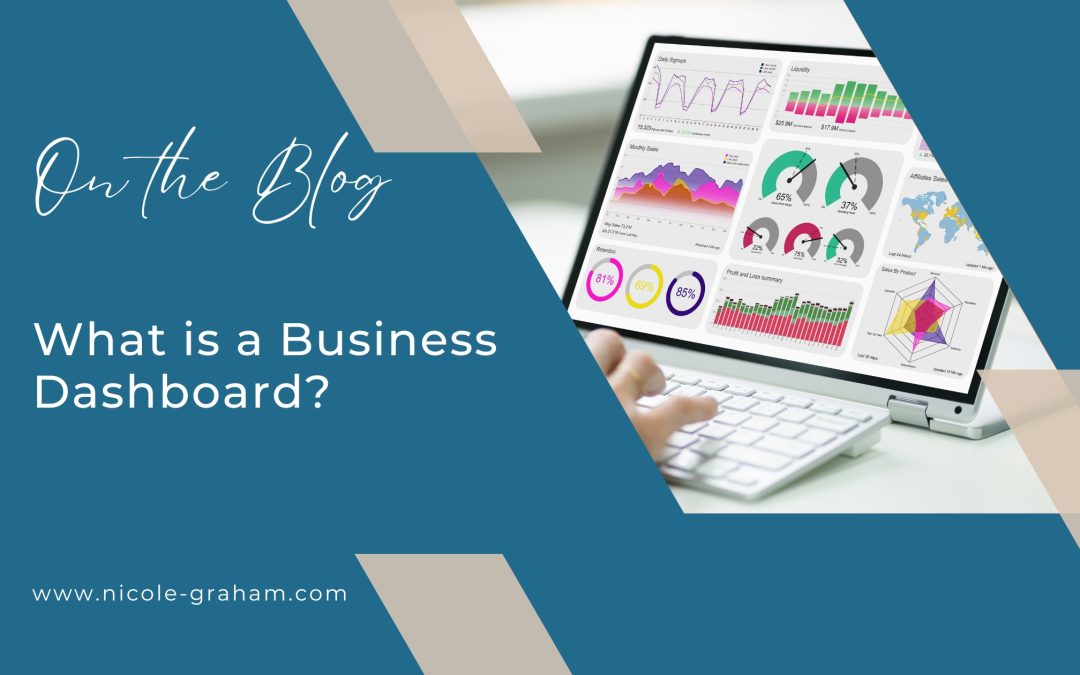
A business dashboard is a visual tool that displays key performance indicators (KPIs), metrics, and data points in an easy-to-read format. Think of it as your business’s command center. Instead of sorting through spreadsheets or reports, dashboards pull the most important data into one central location—so you can see what’s happening in your business at a glance.
Whether you’re a CEO, manager, or part of a small team, a dashboard gives you real-time visibility into how things are going, what’s working, and where to focus your attention.
Why Dashboards Matter
Running a business involves juggling a lot—marketing performance, sales goals, customer service, finances, and more. Without a way to monitor these areas quickly and clearly, decision-making becomes reactive rather than strategic.
A well-designed dashboard changes that. It transforms your data into actionable insights, so you can make smart, confident decisions without the guesswork.
Here are some key features of effective dashboards:
- Data Visualization: Information is presented through graphs, charts, and visuals that are easy to understand—no complex spreadsheets required.
- Real-time or Near Real-time Data: You don’t have to wait for end-of-month reports. Dashboards often update in real time or at regular intervals, so you’re always working with current data.
- Customization: Dashboards are built to reflect your business priorities. Whether you need a high-level overview or granular detail, they can be tailored to different roles and goals.
The Three Main Types of Business Dashboards
Not all dashboards are created equal. Depending on your goals, there are different types that serve different purposes:
1. Operational Dashboards
These focus on daily operations and real-time monitoring. If something goes off track, you’ll know immediately.
Example: A customer service team might use an operational dashboard to track:
- Number of tickets opened, resolved, and pending
- Average response time
- Customer satisfaction scores
This type of dashboard helps teams stay on top of their tasks and quickly respond to issues.
2. Strategic Dashboards
Strategic dashboards provide a big-picture view. They focus on long-term goals and performance across departments.
Example: A CEO might use a strategic dashboard to view:
- Quarterly revenue
- Year-over-year growth
- Market expansion metrics
- Company-wide KPIs
These dashboards are perfect for board meetings, annual planning, and high-level decision-making.
3. Analytical Dashboards
Analytical dashboards dig deeper. They help identify patterns, trends, and insights that drive long-term improvements.
Example: A marketing manager might analyze:
- Website traffic over time
- Conversion rates across campaigns
- Cost per lead by channel
This type of dashboard supports deeper analysis and data-driven strategy development.
What Can You Track on a Dashboard?
The beauty of business dashboards lies in their flexibility. You can build them around what matters most to your business. Here are some common KPIs and metrics used across different functions:
Sales & Revenue
- Total sales
- Sales by product/service
- Monthly recurring revenue (MRR)
- Conversion rate
Marketing
- Website traffic
- Social media engagement
- Email open/click-through rates
- Lead generation performance
Operations
- Project timelines
- Task completion rates
- Inventory levels
- Employee productivity
Customer Experience
- Net Promoter Score (NPS)
- Customer retention rate
- Ticket resolution time
- Average rating from surveys or reviews
Each department or team can have its own dashboard—or you can combine multiple areas into a single, streamlined view for leadership.
Real-Life Examples of Dashboards
Here are a few real-world scenarios where dashboards bring clarity and impact:
- A retail business tracks inventory levels, sales performance by store, and returns—all in one dashboard—so they can restock in real time and improve product availability.
- A digital marketing agency monitors campaign results for multiple clients, including ad performance, click-through rates, and ROI—helping them make informed recommendations fast.
- A coaching business uses a dashboard to track client progress, session frequency, and retention rates, ensuring a consistent client experience and identifying opportunities for upsells.
- Whatever your industry, dashboards can be adapted to suit your business model and workflow.
The Benefits of Using a Business Dashboard
Still wondering if a dashboard is worth the time and investment? Here’s what it can do for you:
- Improved Decision-Making: With a dashboard, you’re not making choices based on gut instinct. You’re using real, up-to-date data to guide your strategy.
- Enhanced Monitoring: Spot red flags before they become big problems. Dashboards help you keep an eye on performance in real time.
- Greater Efficiency: By highlighting bottlenecks or low-performing areas, dashboards give you a clear path to improve operations and boost productivity.
- Better Communication: Dashboards give everyone a common understanding of what success looks like. Whether you’re meeting with your team or reporting to stakeholders, it’s easier to share and discuss performance with visual data.
Final Thoughts
A business dashboard is more than just a pretty screen with numbers—it’s a decision-making tool that brings clarity, focus, and alignment to your team.
Whether you’re managing a team of five or fifty, dashboards can help you track what matters most, stay agile, and keep moving toward your goals with confidence.
If you’re not already using dashboards in your business, now’s the time to start. The data is already there. A dashboard simply gives it purpose.
Would you like help designing a dashboard that actually works for your business? Let’s connect- I’d love to help you bring your numbers to life.

by Nicole Graham | Being in Business
As a leader, one of your primary responsibilities is ensuring that team members deliver results and successfully complete their tasks. When each person individually hits their marks, the entire business benefits. This isn’t just about task completion; it’s about moving the company closer to its larger goals. This is where accountability plays a key role.
To achieve these outcomes, cultivating a culture of accountability across your team is essential. However, holding people accountable can be a challenging task. It requires a delicate balance of clarity, consistency, and empathy. Many leaders struggle with accountability, often finding themselves frustrated, asking the same question: “Why isn’t everyone just doing what they’re supposed to!?”
The truth is, accountability—though often viewed as straightforward—is a leadership skill that involves nuance and thoughtfulness. It’s not simply about enforcing rules but about creating an environment where team members understand expectations, receive constructive feedback, and are empowered to take ownership of their responsibilities.
Here are three essential keys to holding your team accountable while creating a culture that fosters ownership and productivity.
1. Establish Clear Expectations
The foundation of holding your team accountable is establishing clear expectations. You can’t expect accountability if your team doesn’t know what success looks like. It’s like asking someone to run a race without defining the finish line. Your team members need to have a clear understanding of what is expected of them, what deliverables are required, and how their performance will be evaluated.
Defining Success:
Start by setting specific, measurable, achievable, relevant, and time-bound (SMART) goals for each team member. Clear expectations eliminate ambiguity and provide a straightforward path to success. Instead of vague instructions like “improve sales” or “make customers happy,” define measurable outcomes such as “increase sales by 10% this quarter” or “achieve a customer satisfaction score of 90% by the end of the year.”
Two-Way Communication:
Clarity in expectations also requires open communication. Setting goals is not a one-sided process. Encourage your team members to ask questions, raise concerns, and offer feedback when discussing goals. This ensures everyone is on the same page and creates space for any misunderstandings to be addressed early on. A dialogue fosters a deeper commitment, as team members will feel more invested in the process when they are given a voice.
Purpose and Contribution:
Additionally, emphasize the importance of each role and how individual work contributes to the bigger picture. Team members are more likely to be motivated when they understand how their specific efforts help achieve broader business objectives. This sense of purpose is a powerful motivator, reinforcing that every task they complete plays a vital role in the company’s success.
2. Consistently Monitor Performance
After setting clear expectations, it’s essential to consistently monitor your team’s performance. Accountability is not a one-time act – it’s an ongoing process that requires regular attention and feedback. As the saying goes, “We get what we inspect, not what we expect.”
Ongoing Feedback:
One of the most effective ways to ensure accountability is to provide timely and continuous feedback. While formal reviews might happen quarterly or annually, you should aim for more frequent touchpoints to keep your team on track.
Whether it’s through weekly one-to-one check-ins or monthly team meetings, ongoing feedback ensures that you catch issues early before they escalate.
Feedback, however, should not be limited to the formal review process. Regular conversations about what’s going well and what needs improvement will help keep your team aligned with their goals.
As Brené Brown wisely said, “Clarity is kind.” This applies especially to feedback. Sugar coating or tiptoeing around issues will only lead to more confusion and underperformance. When providing constructive criticism, be direct but supportive, and focus on solutions rather than just problems.
Course Corrections:
When performance begins to deviate from the expected standards, monitoring allows you to step in and make course corrections early. If you wait too long to address underperformance, you might find yourself with an unsalvageable situation. Addressing challenges as they arise helps to prevent small issues from growing into larger, more difficult problems.
Recognising Achievements:
Accountability isn’t just about identifying areas for improvement – it’s also about recognising when things are going well. Celebrating wins and offering praise for a job well done reinforces positive behavior, and creates a more motivated, engaged team. Don’t overlook the importance of positive reinforcement; acknowledging your team’s successes helps to build a stronger culture of accountability.
3. Foster a Culture of Accountability
Accountability should not only come from the top down. For it to be effective and sustainable, accountability needs to become part of your organization’s culture. This means creating an environment where everyone takes ownership of their responsibilities and is held to a high standard – by themselves and by each other.
Empowering Team Members:
One way to foster this culture is by empowering your team members to take ownership of their roles. When people feel trusted to make decisions and execute tasks independently, they are more likely to take pride in their work, and hold themselves accountable. Autonomy breeds responsibility. On the other hand, micromanagement can stifle initiative, and foster a culture where people simply do the minimum required.
Open Discussions on Progress:
Encourage open communication about progress and challenges. A culture of accountability means your team feels comfortable bringing up concerns or obstacles before they become unmanageable. This kind of openness not only allows for quicker solutions but also fosters trust. When people feel that they can be candid about their struggles, they are more likely to seek help when they need it, rather than allowing things to spiral out of control.
Peer Accountability:
In a truly accountable team, individuals also hold each other accountable. This doesn’t mean creating a culture of blame, but rather one where people feel responsible for contributing to the group’s overall success. Encourage collaboration and peer accountability by promoting teamwork and shared goals. When team members support one another and hold each other to high standards, they collectively elevate the entire team’s performance.
Lead by Example:
Perhaps the most important aspect of fostering a culture of accountability is leading by example. As a leader, you set the tone for your team. If you consistently follow through on your commitments, own your mistakes, and hold yourself to the same standards you expect from your team, you’ll inspire them to do the same. Accountability starts at the top—if you’re not holding yourself accountable, you can’t expect your team to.
Accountability as a Continuous Practice
Accountability isn’t a one-time initiative. It’s a continuous practice that needs to be embedded into the fabric of your organization. By establishing clear expectations, consistently monitoring performance, and fostering a culture of accountability, you can create a team that is not only productive but also motivated, engaged, and invested in the success of the company.
The journey to building a culture of accountability takes time, effort, and consistency. But the payoff – seeing your team grow, thrive, and achieve results – is well worth the investment.
If creating and maintaining this culture feels overwhelming or if you’d like support in ensuring your team stays on track, I’d love to help. As an Online Business Manager, I specialize in helping business owners, like you, manage their teams effectively, so you can focus on driving your business forward. Feel free to reach out if you’d like to explore how we can work together.
Nicole

by Nicole Graham | Being in Business
Entrepreneurs today juggle countless responsibilities, often leaving little room to focus on growth and strategy. To lighten the load, many turn to Virtual Assistants (VAs) or a Remote Administrative Professional for support. However, hiring a VA requires careful consideration to ensure a successful and productive partnership.
To make the right decision for you and your business, consider the following key factors:
- Who you want to work with
- The amount of support time you’ll need
- Whether to hire locally or overseas
- The skills and experience your VA needs
Who You Want to Work With
Ultimately, there are two options – an individual or an agency.
Independent, Solo Virtual Assistant
Working directly with an independent VA has its perks:
- Direct communication: A one-on-one relationship fosters clear, open communication and ensures the VA understands your unique business needs.
- Flexibility: Independent VAs often offer adaptable service packages and pricing, catering to your specific requirements.
- Personalized approach: Solo VAs can align with your work style, providing a tailored experience.
However, this option also has its challenges:
- Limited availability: Solo VAs may have other clients, making it harder to meet urgent deadlines during busy periods.
- Single point of failure: If your VA becomes unavailable due to illness or personal circumstances, your business could face delays without immediate backup.
VA Through an Agency
Agencies connect clients with pre-screened, trained VAs, offering distinct advantages:
- Reliability and scalability: Agencies provide access to a pool of skilled VAs, ensuring uninterrupted support and the ability to scale services as needed.
- Backup support: If your assigned VA is unavailable, agencies typically provide a replacement to minimize disruptions.
- Streamlined processes: Agencies handle onboarding, training, and quality control, saving you time and ensuring professionalism.
However, there are some drawbacks:
- Higher costs: Agency services often include additional fees, making this option pricier than hiring directly.
- Potential communication gaps: Some agencies act as intermediaries, which could slow down communication or lead to misunderstandings. Opt for agencies that allow direct client-VA communication to avoid this.
Time Requirements
Determining how much support you need is crucial. Different arrangements offer unique benefits:
Bulk Hours Over a Period of Time
- Pros: Ideal for businesses with irregular needs, allowing you to delegate tasks as they arise within a flexible timeframe.
- Cons: Requires planning ahead, as VAs may have limited availability for last-minute tasks.
Set Hours Per Month
- Pros: Suitable for consistent but manageable workloads. VAs can schedule and prioritize tasks based on deadlines.
- Cons: Additional support may be unavailable if your workload unexpectedly increases. Confirm whether extra hours can be purchased if needed.
Dedicated Full or Part-Time Support
- Pros: Offers guaranteed availability during specific hours, leading to faster response times and dedicated focus.
- Cons: Higher costs, but the increased productivity often justifies the investment.
Location Considerations
Hiring a Local VA
- Pros: Local VAs understand regional regulations, customs, and language. Minimal time zone differences ensure real-time collaboration.
- Cons: Higher costs and a smaller talent pool may make finding the right VA more challenging.
Hiring Overseas (e.g., Hong Kong, Philippines, or India)
- Pros: These regions offer skilled VAs with competitive rates and diverse expertise. Many VAs are experienced in working with international clients and possess strong English skills.
- Cons: Time zone differences can affect real-time communication. When hiring an individual directly, carefully check references and ensure reliability.
Skills and Expertise
Define the skills and expertise your VA must have. Are you seeking help with:
- Administrative tasks?
- Customer support?
- Social media management?
- Content creation or graphic design?
When evaluating candidates, ask for references or testimonials to assess their professionalism and reliability. Discuss the tools and platforms they are proficient in and ensure they align with your business needs.
Remember: no VA excels in every area. For example, a VA skilled in marketing may not be suited to manage your accounts, and a VA great at scheduling might not have the expertise to write compelling blog posts. Choose a VA whose strengths align with your priorities.
It’s important to consider whether you need a Virtual Assistant or a specialized professional, such as a Social Media Marketer, Copywriter, or Graphic Designer. Skills, experience, and quality of work can vary significantly. While a VA might use AI to generate content, that doesn’t make them an expert in crafting your social media strategy or producing high-quality, targeted content.
Final Thoughts
Hiring a Virtual Assistant can be a transformative step for entrepreneurs looking to reclaim their time and focus on core business goals. Whether you choose an independent VA or work through an agency, understanding the pros and cons of each option is key to making an informed decision.
By investing time in the hiring process and selecting the right fit, you’ll unlock the secrets to a successful partnership – empowering you to achieve greater entrepreneurial success.
If you’re feeling unsure about where to start or how to find the right Virtual Assistant for your business, I can help. With experience in sourcing skilled and reliable VAs, I’m here to make the process smoother and more efficient, so you can focus on what matters most, and that is growing your business.
Nicole

by Nicole Graham | Being in Business
Do you feel like you’re constantly overwhelmed, juggling countless tasks yet never crossing enough off your to-do list? If so, you’re not alone. Many people feel the weight of an “invisible workload” that keeps them from achieving their goals. Let’s explore what this invisible workload is and how you can manage it effectively.
What Is the Invisible Workload?
Picture this: while trying to focus on your business, your mind is also preoccupied with personal errands – a birthday gift, a doctor’s appointment, and planning dinner. On the business front, you’re thinking about finalizing a proposal, preparing for a product launch, and gearing up for a client meeting.
This constant mental juggling is the essence of the invisible workload. It’s not just about the tasks you complete; it’s the mental energy spent planning, delegating, and tracking them.
The Invisible Workload Is Exhausting
Even when you’re not physically completing tasks, the mental burden of thinking about them can be draining. Whether it’s planning projects, delegating work, or following up, the invisible workload consumes valuable mental bandwidth.
How Does It Affect You?
The invisible workload can lead to stress, frustration, and burnout. You might feel as though you’re always playing catch-up, staying up late to tackle tasks you couldn’t get to during the day. For entrepreneurs, this pressure is compounded by the demands of running a business and making countless decisions daily. Over time, this constant juggling can hinder both personal and professional growth.
The invisible workload in business often consists of tasks that don’t directly move the needle but are necessary for operations. Examples include:
- Planning: Deciding what needs to be done, by whom, and by when.
- Delegating: Communicating tasks, offering guidance, and ensuring clarity.
- Following Up: Checking on progress, providing reminders, and ensuring deadlines are met.
- Decision-Making: Making small or large choices that require time and mental energy.
What Can You Do About It?
If the invisible workload feels overwhelming, here are three strategies to regain control:
1. Simplify Your To-Do List
Focus on high-priority tasks with the greatest impact. Create a weekly to-do list instead of a daily one, and remove routine tasks you won’t forget, like checking email. Prioritize 1–2 key tasks per day and ask yourself, “Can this task be delegated?” Over time, you’ll recognize which tasks require your input and which can be handed off.
2. Encourage Leadership Within Your Team
Empower your team to take ownership of their roles. Create standard operating procedures (SOPs) to provide clarity and consistency. Start by recording yourself performing a task, then delegate the task and have the team member document the process. Review and refine the SOP over time to ensure accuracy and efficiency.
3. Hire the Right Support
If you’re struggling to manage everything, consider outsourcing.
- Virtual Assistants (VAs): Ideal for handling repetitive administrative tasks, freeing you to focus on strategic priorities.
- Online Business Managers (OBMs): Perfect for managing teams, implementing strategies, and ensuring tasks are completed on time.
Both VAs and OBMs can significantly lighten your load, and tackle your invisible workload, allowing you to focus on growth and innovation.
Final Thoughts
The invisible workload is a natural part of being a business owner, but it doesn’t have to consume your life. By simplifying your tasks, empowering your team, and outsourcing when needed, you can reclaim your time and energy.
Take the first step toward lightening your load today. Whether it’s creating SOPs, hiring a virtual assistant, or exploring how an online business manager can support you, action beats overwhelm every time.
Ready to free yourself from the invisible workload? Let’s explore how my services can help you simplify your business operations, create effective systems, and delegate with confidence. Contact me today to start the journey toward a more balanced and productive life!
Nicole

by Nicole Graham | Being in Business
There’s nothing quite like the optimism of an entrepreneur on day one of starting a business.
Fueled by creativity, ambition, and a desire to make an impact, you launched your company with big dreams of leaving a legacy, making a difference, and achieving the life you’ve always envisioned.
But here’s the truth: entrepreneurship, while exhilarating, can also be exhausting, draining, and overwhelming.
For many business owners, the reality of running a company is far from the fantasy. The excitement of being your own boss can quickly be overshadowed by the day-to-day grind of endless to-dos, mounting responsibilities, and constant problem-solving.
If this feels all too familiar, you’re not alone. Many business owners wrestle with the same challenges, even if everything appears seamless from the outside.
Here are some common signs that your business might be leaking:
- Instead of working less, you’re working around the clock with no end in sight, wondering how things got so out of control.
- Sleepless nights are now the norm, as you lie awake worrying whether critical tasks have been completed.
- A client complains about a missed deliverable and demands a refund, leaving you blindsided and unsure of what went wrong.
- You discover a team member didn’t follow through on an email you sent days ago, forcing you to scramble to fix the issue.
- You’re completely in the dark about what your team is working on and question if tasks are even getting done.
- Constant interruptions from team members asking questions are driving you crazy. Why can’t they just figure it out themselves?
- Last-minute, urgent tasks keep piling up, frustrating your team and making you worry about retention.
- Your assistant seems to be the only one who knows how everything works, and you’re terrified of what will happen if they leave.
- You have a clear vision of how things should be done, but delegated work often comes back incomplete or incorrect.
- Your calendar is a disaster—overbooked, missed meetings, and double bookings are becoming a regular occurrence.
- Your finances feel like a mystery. Payments are late, or worse, you’re unsure when (or if) they’re coming in.
- You’re winging it daily, without a clear plan for what’s next.
- Simple tasks like answering emails are consuming your time, leaving no room for the strategic work that could grow your business.
- Your loved ones are begging for your attention as you struggle to step away from the screen.
- You wake up dreading the day ahead. What once brought you joy now feels like a constant uphill battle.
The Challenge of Running a Business
It’s one thing to grow a business; it’s entirely another to run it. This is where many entrepreneurs struggle.
I call this Leaky Bucket Syndrome – pouring energy into filling your business with sales, marketing, and clients, while neglecting the foundational systems that keep it running smoothly.
The behind-the-scenes operations of a business are often overlooked because they seem tedious, overwhelming, or just plain dull. Yet, these are the very elements that determine whether your business thrives or falters. Without the right structures, you risk chaos, inefficiency, and costly mistakes.
But here’s the good news: every one of these challenges is solvable with the right systems and tools in place.
Systems That Do the Heavy Lifting
Strong, reliable systems are the backbone of a successful business. They ensure your operations run smoothly, freeing up your time and energy for the work you’re truly passionate about. Here’s what good systems can do for you:
- Financial Clarity: Online accounting systems give you real-time access to your financial health, so you always know where the money is.
- Data Security: A robust security system for your email and website can protect against downtime and lost revenue.
- Streamlined Marketing: Sales and marketing systems keep your efforts efficient, organized, and measurable.
- Project Management: Tools that track day-to-day activities, client work, and business development ensure nothing slips through the cracks.
Whatever your business needs, there’s likely a system designed to make your life easier.
Professional Support Makes All the Difference
If researching and implementing systems feels overwhelming, don’t worry. There are professionals who specialize in building and optimizing business operations. These experts can identify what you need and set it up in a fraction of the time it would take you to figure it out on your own.
Once your systems are in place, you can supercharge your operations with a business dashboard. Dashboards provide a high-level overview of your key metrics, pulling together critical data so you can make informed, data-driven decisions.
With a dashboard, you’ll no longer rely on guesswork or assumptions. Everything you need—financials, team performance, project progress—will be at your fingertips, empowering you to steer your business with confidence.
Rediscover Your Passion
When your business is supported by systems and data, the growing pains subside. You can refocus on the passion and excitement that drove you to start your business in the first place.
I know because I’ve been there. As an entrepreneur who has experienced the ups and downs of business ownership, I can tell you: the right tools and support make all the difference.
If you’re ready to plug the leaks in your business and get back to doing what you love, I’d be thrilled to help. Let’s work together to build a stronger, more sustainable business – one that energizes and excites you once again.
Nicole
